
| Purpose Learning Stations allow learners to rotate through different activities, practising and consolidating skills in an interactive, hands-on way. This strategy promotes independent learning, differentiation and engagement. The biblical responsibility to foster teamwork is also upheld through this strategy as it encourages turn-taking and sharing of resources. |
| Time Needed: 20–40 minutes |
| How to Implement Learning Stations: Step 1: Set Up Stations – Prepare a variety of activities or tasks targeting the skills or concepts to practise. – Place materials at separate tables or areas. – Ensure instructions are clear at each station. Step 2: Organise Learners – Learners rotate individually or in small groups. – Explain rotation schedules, timing and expected behaviours. Step 3: Engage in Activities – Learners complete tasks at each station independently or collaboratively. – Teacher circulates to support, observe and provide feedback. Step 4: Review and Reflect – Bring the class together to discuss what they learned at each station. – Ask learners which stations helped them most and why. – Encourage reflection on strategies used and understanding gained. |
| When to use Learning Stations: – Practice and consolidation after explicit teaching/demonstration |
| Social/Emotional Learning benefits: – Encourages independence and responsibility – Supports cooperation in small groups – Allows students to learn at their own pace – Increases engagement and reduces frustration |
| Large Class Adaptations: – Fewer stations with larger groups – Time rotations strictly – Duplicate popular stations if possible |
| Low-resource Adaptations: – Use simple, repeated tasks with minimal materials – Rotate activities using chalkboard instructions – Use student books instead of printed resources – Include discussion-based or oral stations |
| Examples for Age Ranges: Primary: Counting, drawing, and matching stations Upper Primary: Maths problem-solving, reading, and writing stations Secondary: Subject-based stations (e.g. experiment, reading, discussion) |
| Classroom Examples Mathematics – Addition Stations: – Dice addition: Roll dice and write sums – Manipulatives: Use sticks, stones, or bottle caps for addition – Cards: Flip two cards and add numbers – Movement: Flip two numbers and perform corresponding actions – Quick sheets: Answer as many addition questions as possible in a set time Cross-curricular: Stations can be adapted for literacy, science, or social studies. |
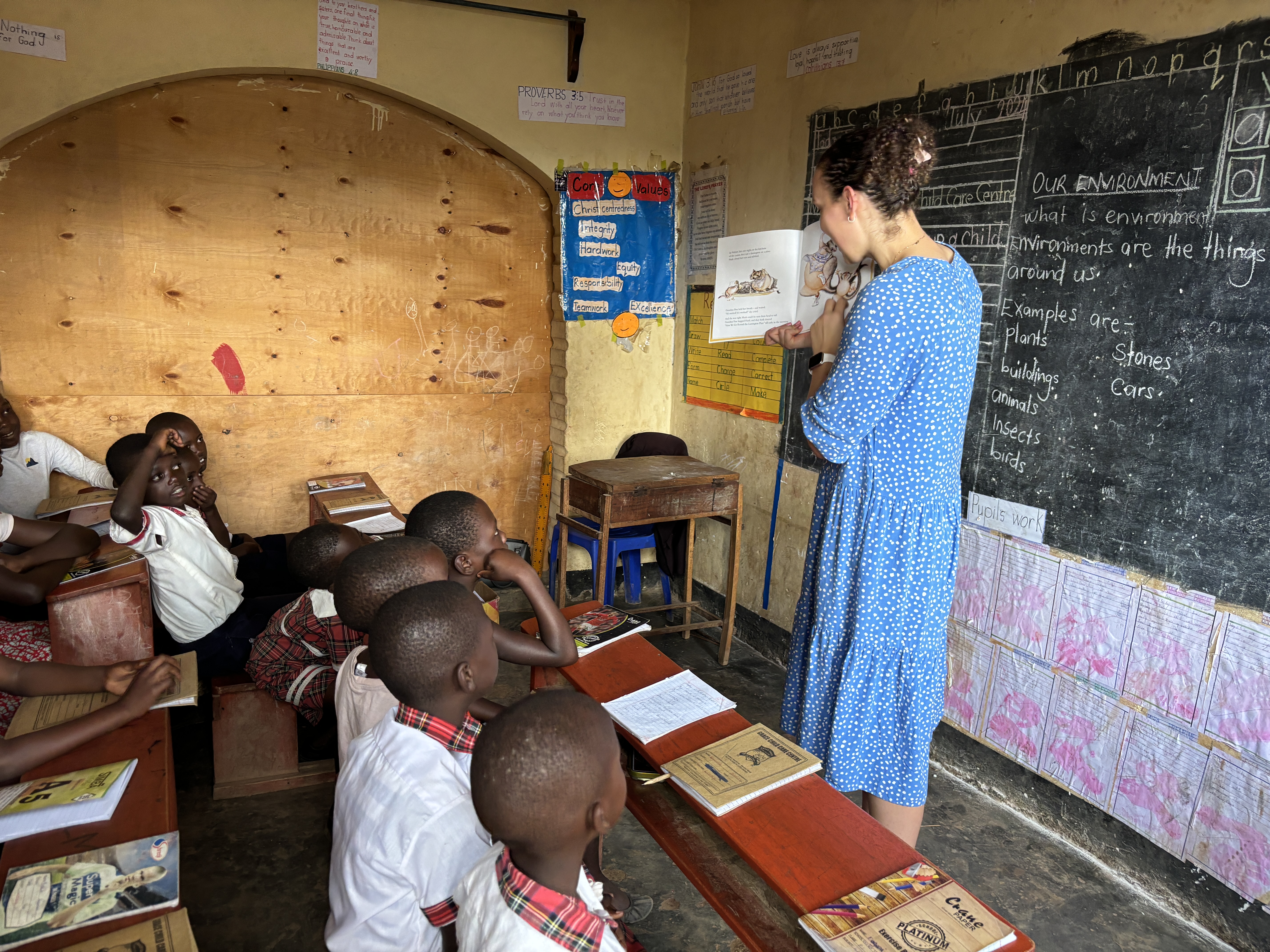
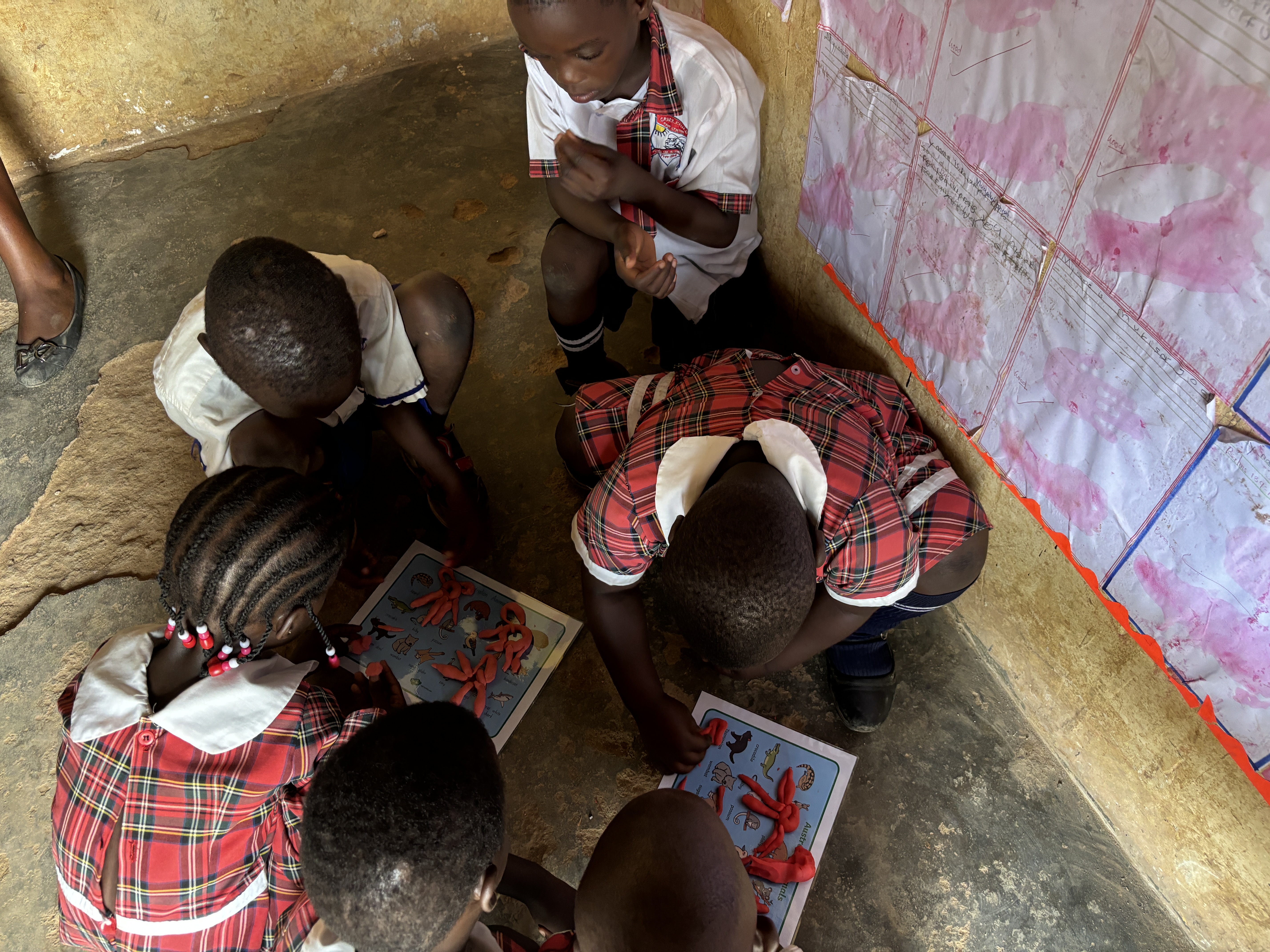
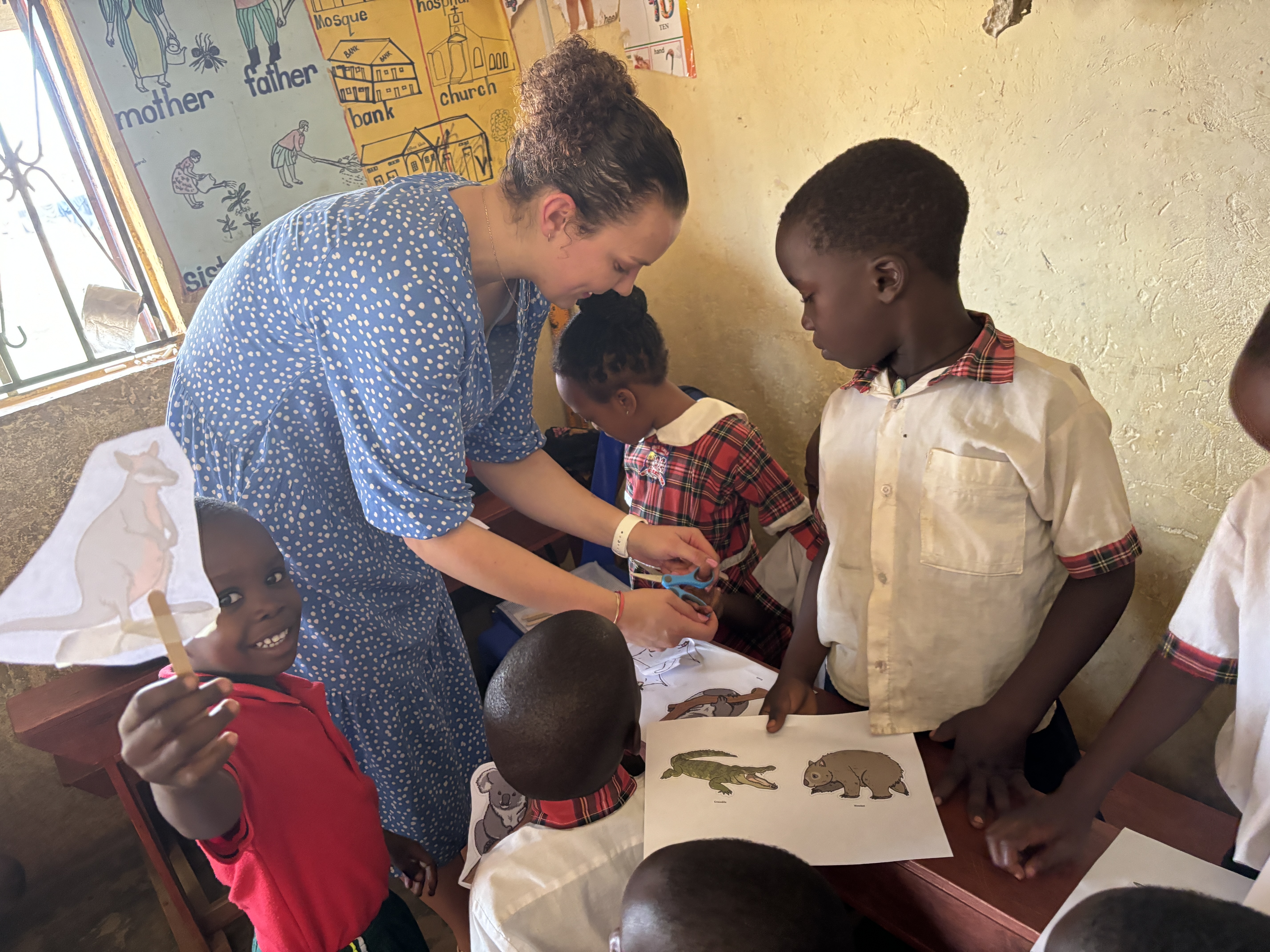
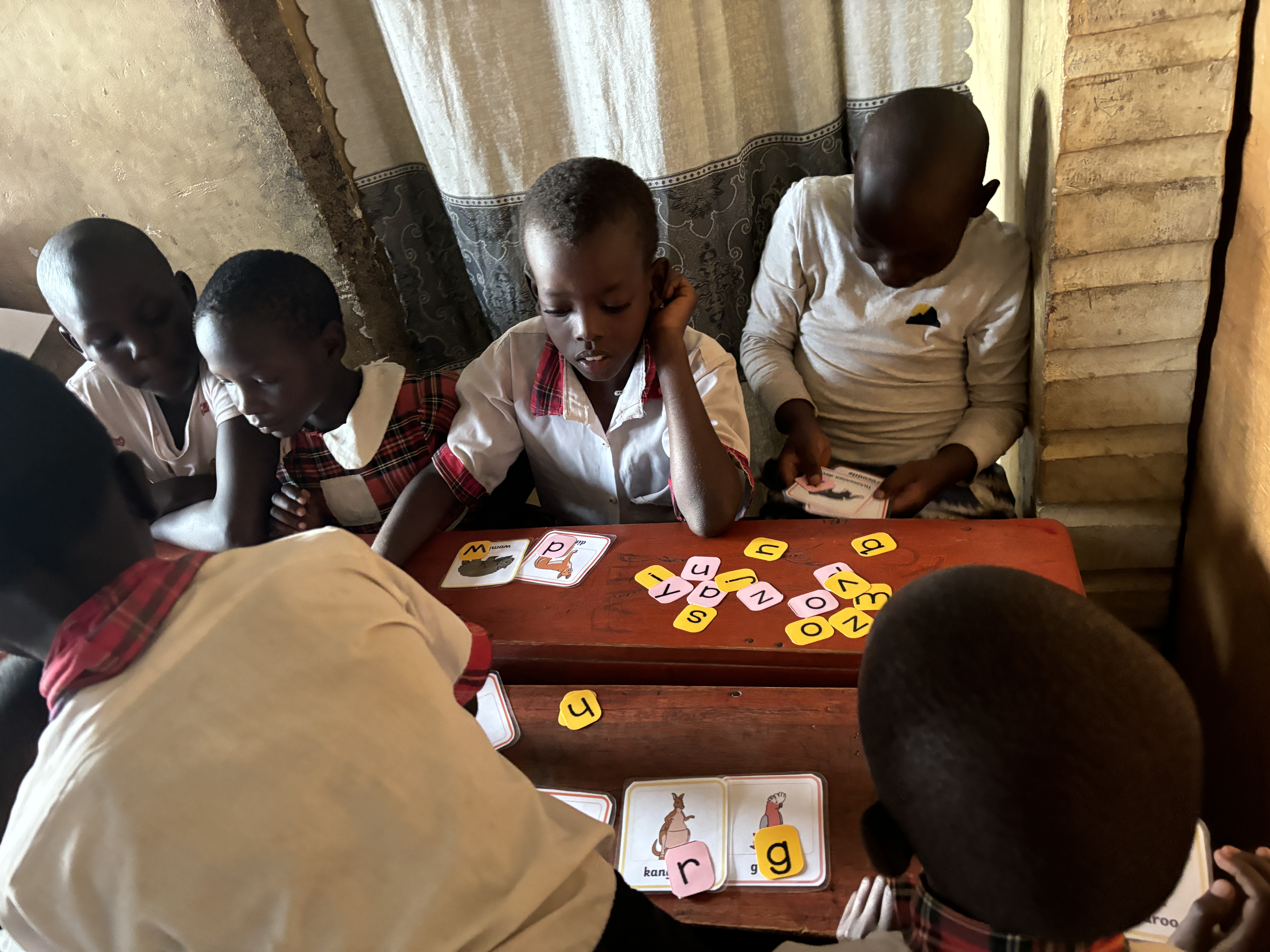
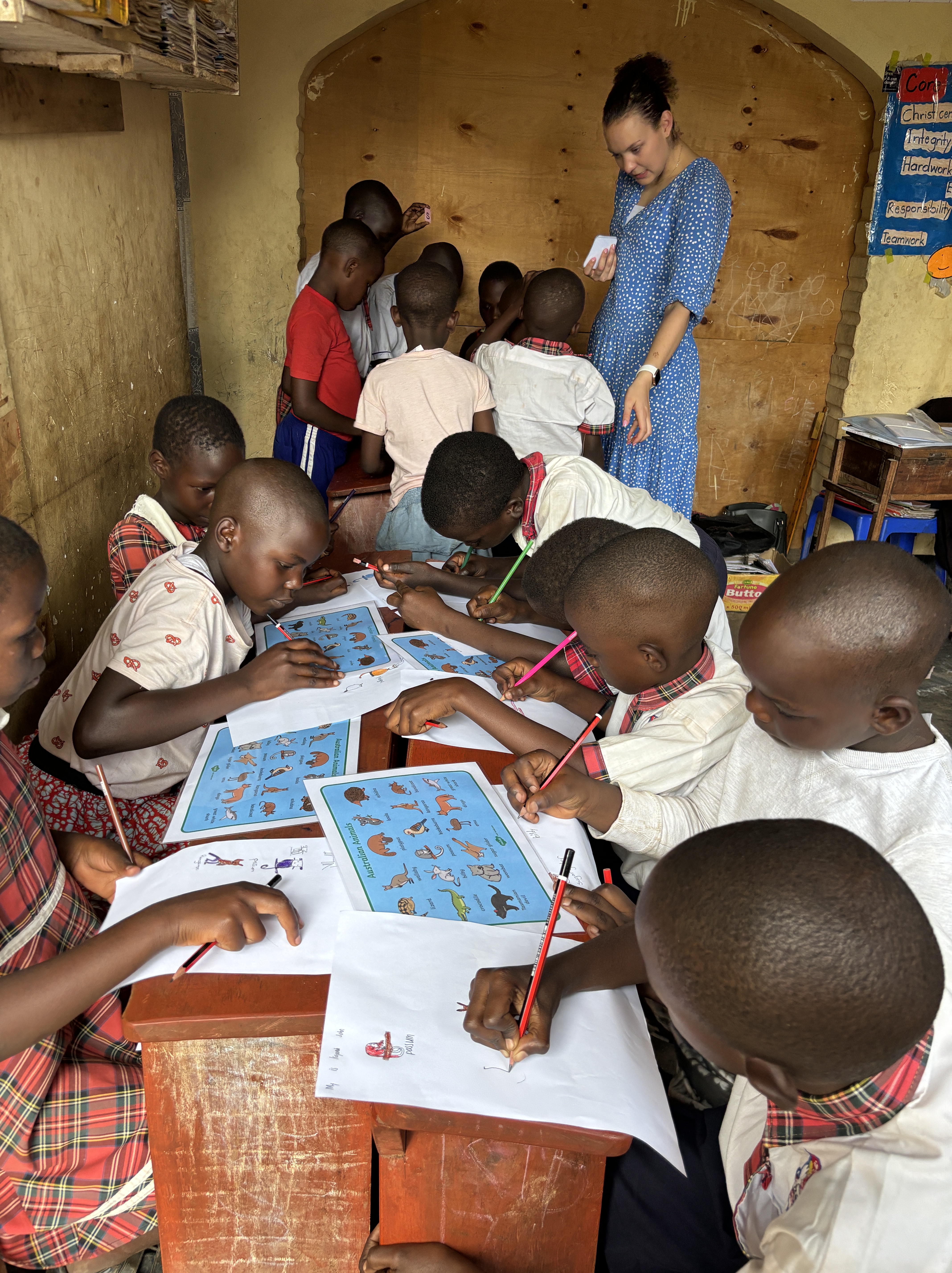
In these photos, students were read a story and then provided an opportunity to work in groups to complete activities linked to the story about animals. They drew and wrote animal names, connected beginning the letter of animals names to animal pictures, and made animal puppets for story making.

